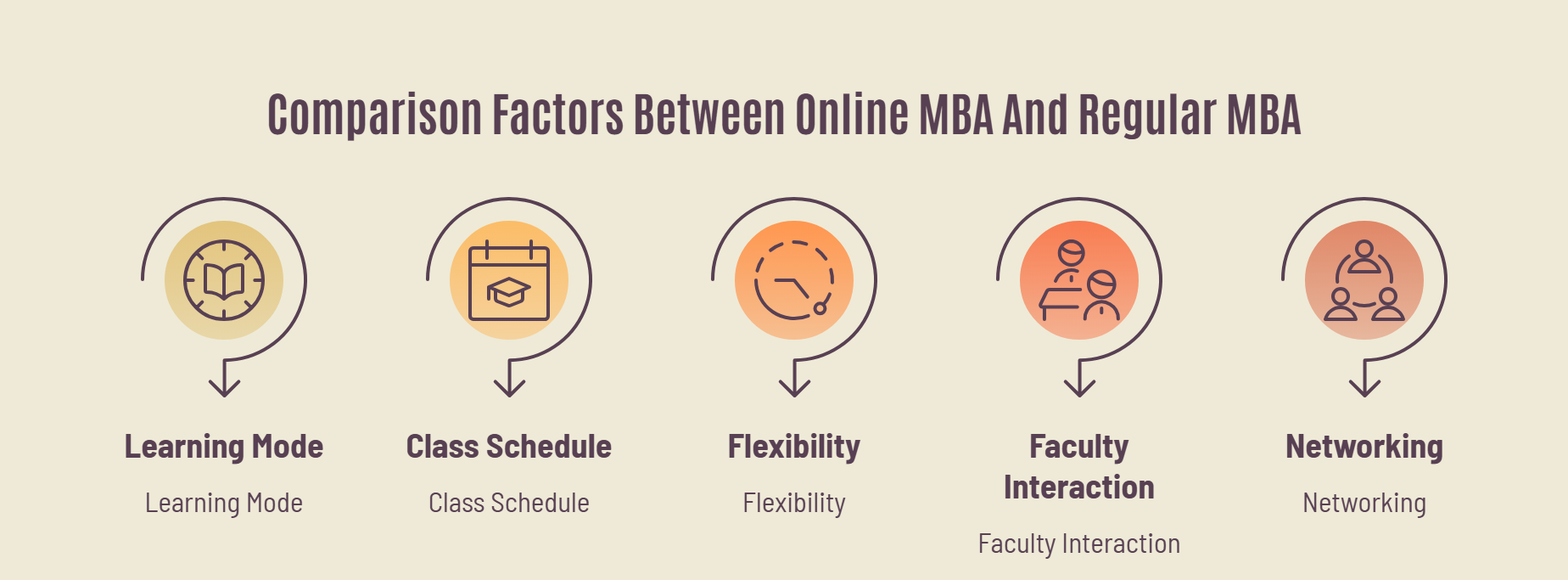
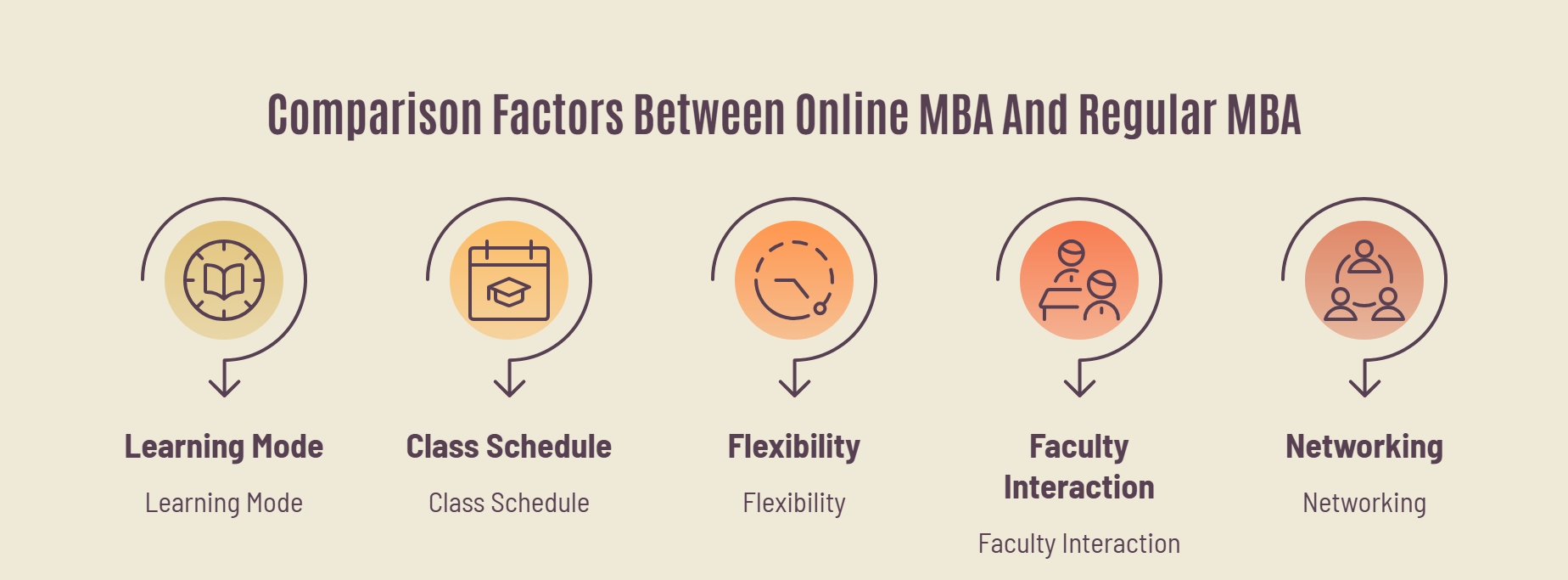
Comparison Factor | Online MBA | Regular MBA |
Learning Mode | Digital learning platforms | Physical classrooms |
Class Schedule | Live and recorded sessions | Fixed classroom timetable |
Flexibility | Greater flexibility in managing study time | Requires regular campus attendance |
Faculty Interaction | Virtual classes and discussions | Face-to-face interaction |
Networking | Online learner communities and virtual events | Campus activities and peer interactions |
Practical Learning | Projects, assignments and case studies | Projects, presentations and internships |
Location | Can be pursued remotely | Requires campus attendance |
Attendance | Online participation as per university guidelines | Physical attendance as per university guidelines |
Study Resources | Digital notes, recordings and online materials | Classroom resources and digital materials |
Learning Environment | Independent and technology-based | Structured and campus-based |
The main difference between an Online MBA and a Regular MBA lies in the learning environment. Online MBA students access digital resources, attend virtual classes and revisit recorded lectures, while Regular MBA students follow a fixed classroom schedule and participate in on-campus activities.
Both formats cover essential management concepts, but the level of flexibility, faculty interaction and peer engagement differs. An Online MBA offers more control over study schedules, whereas a Regular MBA provides a structured academic routine and direct classroom interaction.
Want to know more before applying? Explore VISTAS University's Online MBA eligibility to learn about its curriculum, fees and admission process.
Online MBA vs Regular MBA: Fees and Overall Expenses
The cost of an MBA depends on the university, program structure, facilities and learning format. Regular MBA programs may involve additional expenses related to accommodation, commuting, campus activities and other academic requirements.
An Online MBA generally has fewer campus-related expenses. Students can continue living in their current city, avoid relocating for education and manage their studies without daily travel to a university.
Expense | Online MBA | Regular MBA |
Tuition Fees | Varies by university and program | Varies by university and institution |
Accommodation | Usually not required | Hostel or rental expenses may apply |
Travel | Minimal commuting expenses | Daily travel expenses |
Study Materials | Primarily digital | Digital and physical resources |
Campus Activities | Virtual academic activities | Campus events and activities |
Technology | Computer and internet connection | Computer and other academic resources |
Food and Living | Existing household expenses | Additional expenses may apply if relocating |
For working professionals, an Online MBA can also reduce the financial disruption of leaving a job or relocating. The overall cost depends on tuition fees, payment options and additional expenses associated with each format.
Choose the Right Learning Format with VISTAS University's Online MBAConsidering an Online MBA but unsure how it compares with a Regular MBA? VISTAS University's Online MBA offers graduates an opportunity to develop management knowledge through a flexible digital learning format. Why consider VISTAS University's Online MBA? Earn a postgraduate management degree through a two-year online program. Build knowledge across core business and management areas. Access academic resources through a digital learning platform. Study without relocating or attending regular campus classes. Balance higher education with work and personal commitments.
Explore the Online MBA from VISTAS University to learn more about the program, curriculum and admission requirements. |
How Does the Learning Experience Differ Between Online and Regular MBA?
The teaching methods used in both MBA formats influence how students participate in academic activities, interact with faculty and understand management concepts.
Although the subjects may be similar, the experience of learning them can be quite different.
Online MBA learning experience
Live Classes: Students attend scheduled virtual lectures and interact with faculty members during sessions. These classes allow learners to discuss management concepts, ask questions and participate in academic discussions.
Recorded Lectures: Recorded sessions allow students to revisit topics and study at convenient times. This can be useful when a learner wants to understand a difficult concept before moving to the next topic.
Digital Resources: Study materials, assignments, presentations and other academic resources are available through online platforms. Students can access these materials without visiting a physical campus.
Virtual Discussions: Students participate in discussions and collaborate with classmates through digital tools. Group assignments and online presentations can also encourage teamwork.
Independent Learning: Learners manage their study schedules while completing assignments and assessments. This requires consistency and the ability to balance academic responsibilities with other commitments.
Regular MBA learning experience
Classroom Teaching: Students attend face-to-face lectures and interact directly with faculty members. They can ask questions during discussions and receive immediate feedback.
Group Activities: Presentations, discussions and group assignments encourage teamwork. Students get opportunities to understand different viewpoints while working on academic tasks.
Campus Exposure: Students can participate in seminars, academic events, workshops and other campus activities. These experiences can help them understand different aspects of business and management.
Peer Interaction: Regular classroom interaction creates opportunities to build professional connections. Students also learn from the experiences and academic backgrounds of their classmates.
Practical Activities: Projects, internships, presentations and case studies help students understand real business situations and apply theoretical concepts.
An Online MBA can suit individuals who need flexibility because of work or personal responsibilities. A Regular MBA may appeal to students who prefer structured classroom learning and daily campus interaction.
The quality of learning in either format also depends on how actively students participate. Attending lectures, completing assignments, contributing to discussions and working on practical projects are important parts of management education.
Want to know what you will study? Explore the Online MBA syllabus to learn about the subjects and topics covered across the program.
Career Opportunities After Online MBA vs Regular MBA
An MBA introduces students to different areas of business management, including marketing, finance, human resources and operations. Graduates from both formats can explore opportunities across these sectors.
The career path a person chooses often depends on their specialisation, previous work experience, professional interests and ability to apply management concepts in the workplace.
Here are some career areas and the roles associated with them:
Job Roles | Key Responsibilities | Average Salary in India |
Marketing Manager, Brand Manager | Planning campaigns, managing brands and understanding consumer behaviour | INR 13.3 LPA, INR 19.1 LPA |
Financial Analyst, Finance Manager | Analysing financial information, budgeting and supporting investment decisions | INR 6.8 LPA, INR 17.7 LPA |
HR Manager, Talent Acquisition Manager | Recruitment, employee engagement and workforce planning | INR 11.3 LPA, INR 15.5 LPA |
Operations Manager, Supply Chain Manager | Managing business processes, resources and supply chain activities | INR 11.4 LPA, INR 15.4 LPA |
Business Development Manager, Sales Manager | Identifying business opportunities and maintaining client relationships | INR 8.2 LPA, INR 7.6 LPA |
Business Manager, Project Manager | Coordinating teams, managing projects and supporting business decisions | INR 12.1 LPA, INR 18 LPA |
Source: AmbitionBox
Marketing: Marketing professionals focus on promoting products, managing brands and understanding customer behaviour. An MBA introduces concepts such as market research, digital marketing and advertising.
Operations: Operations roles focus on managing business processes, resources, production planning, logistics and supply chain activities.
Career opportunities depend on specialisation, practical knowledge and professional skills. Internships and academic projects can help fresh graduates gain exposure, while working professionals can combine their existing experience with MBA knowledge.
Why Choose VISTAS University for an Online MBA?
VISTAS University Online offers an Online MBA designed for graduates interested in developing management knowledge through a digital learning format.
VISTAS has an established presence in higher education and offers online degree programs for learners who want to pursue further studies without attending regular campus classes.
Some important features of the university and its Online MBA include:
NAAC A++ Accreditation: VISTAS has received an A++ grade from the National Assessment and Accreditation Council. This reflects the institution's accreditation standing.
UGC Entitlement: VISTAS is included in the UGC-DEB list of institutions entitled to offer online programs, with its MBA included in the 2025-26 program listing.
Flexible Learning: Students can access learning resources through the online platform and participate in virtual academic sessions.
Management Education: The MBA curriculum covers core management areas that introduce students to business functions, organisational practices and managerial decision-making.
Digital Learning Environment: The online format allows students to access academic resources remotely and manage their learning around other commitments.
The program is relevant to graduates who want to pursue management education without making a complete shift to a campus-based academic routine. It can also be considered by working professionals who want to build their understanding of business management while continuing their careers.
Degree Recognition and Academic Value
Recognition is an important consideration when choosing an online postgraduate program.
UGC Recognition: Degrees from recognised or entitled online programs are treated as equivalent to corresponding conventional degrees, subject to UGC regulations.
University Status: VISTAS is a deemed-to-be university established under Section 3 of the UGC Act, 1956.
UGC-DEB Entitlement: VISTAS's Online MBA was included in the UGC-DEB entitlement listing for the 2025-26 academic session.
Academic Recognition: An online degree is not considered less valid solely because of its mode of delivery.
Program Value: VISTAS combines its institutional accreditation with a digital learning format for postgraduate management education.
Conclusion
Choosing between an Online MBA and a Regular MBA comes down to your preferred learning style, career goals and personal commitments. While a Regular MBA offers classroom learning and campus exposure, an Online MBA provides the flexibility to study without relocating or putting other responsibilities on hold.
For those seeking flexible management education, VISTAS University's two-year Online MBA offers a way to build business knowledge while managing work and personal commitments. Ultimately, the right choice is the one that fits your goals and the way you want to learn.
Planning to apply? Explore the Online MBA admission process to understand the application steps and enrolment requirements.